
Herbs are the unsung heroes of the culinary world. They possess the unique power to transform a flat, uninspiring dish into a vibrant, multi-layered masterpiece with just a single handful. Yet, standing in the grocery store aisle or looking into the pantry, home cooks are routinely faced with a foundational dilemma: should they reach for the fresh bundles in the produce mist or the convenient glass jars on the spice rack?
Understanding when to use fresh versus dried herbs is not a matter of choosing high quality over low quality. Both forms are incredibly valuable culinary tools, but they behave like completely different ingredients. They release their volatile oils under different conditions, require distinct cooking times, and deliver vastly different flavor profiles. Master the unique properties of both, and you will unlock complete control over the aroma, depth, and balance of your cooking.
The Science of Flavor: Fresh vs. Dried
To make smart decisions in the kitchen, it helps to understand what happens to an herb during the preservation process. Fresh herbs are packed with water weight and delicate, volatile essential oils. These oils are highly sensitive to heat and air, meaning they release their aromas almost instantly when chopped or exposed to warmth.
When an herb is dried, the moisture evaporates completely, leaving behind a highly concentrated capsule of fiber and stabilized essential oils. Because the water is gone, the flavors in dried herbs are deeply compressed. Gram for gram, dried herbs deliver a much more potent, intense punch of flavor than their fresh counterparts. However, the drying process also causes the volatile, bright, and citrusy top notes of the herb to vanish, leaving behind deeper, woodier, and sometimes more bitter undertones.
Categorizing Herbs: Tender vs. Woody
A highly effective rule of thumb for deciding whether to buy fresh or dried is to analyze the physical structure of the plant. Herbs generally fall into two structural categories: tender herbs and woody herbs.
Tender Herbs
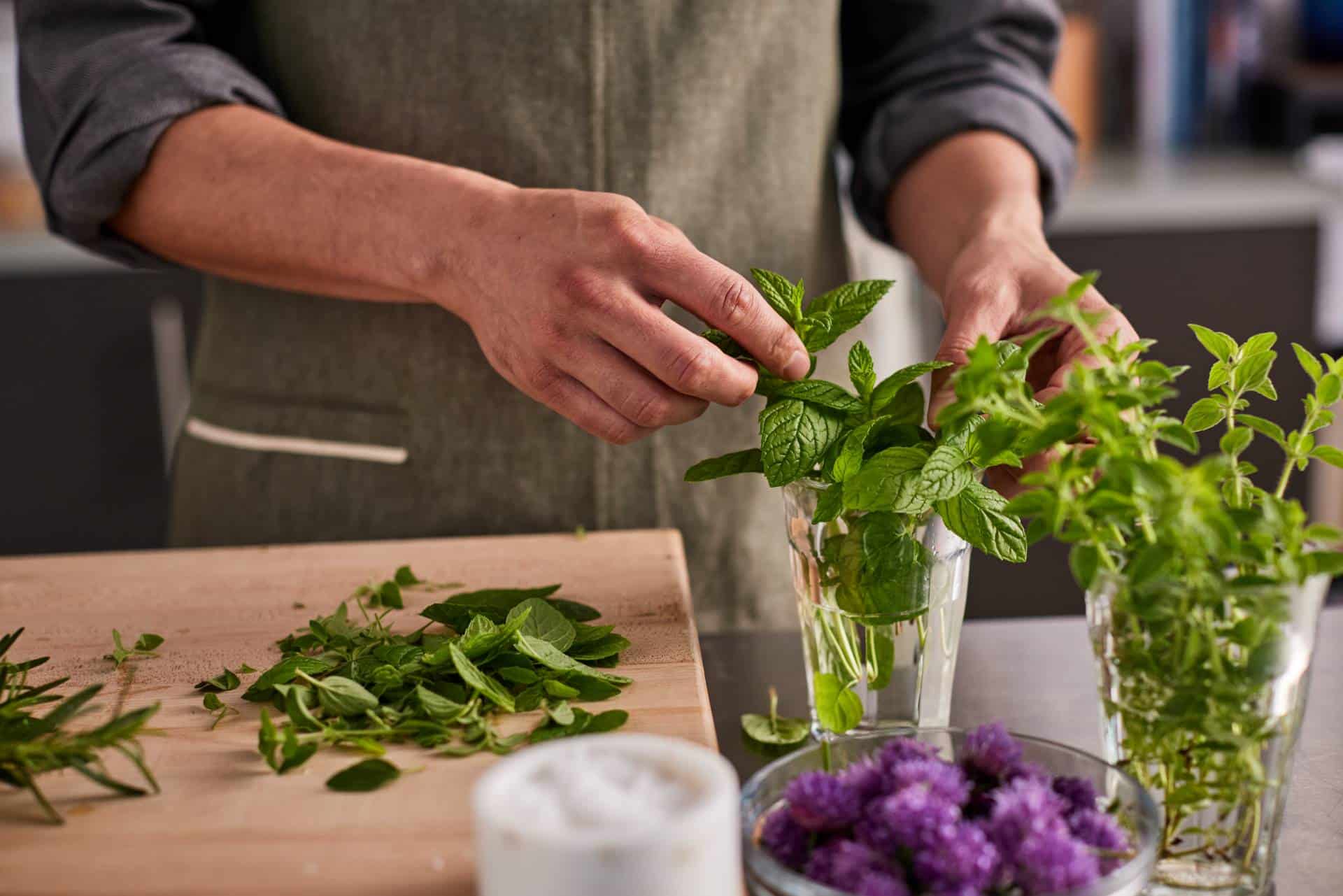
Tender herbs feature soft, delicate stems and thin leaves. This category includes basil, cilantro, parsley, dill, mint, chervil, and tarragon. Because their cell walls are incredibly fragile, these herbs do not survive the commercial drying process well.
Dried parsley, for example, often tastes like little more than colorful dust, losing almost all its fresh, peppery character. Cilantro completely loses its bright, citrus-like punch when dried. For this entire category, fresh is almost always superior. If you must use them dried, recognize that they will add color but very little dynamic flavor.
Woody Herbs
Woody herbs feature tough, fibrous, or resinous stems and needle-like or leather-like leaves. This category includes rosemary, thyme, oregano, marjoram, bay leaves, and sage. These plants are native to hot, arid climates, meaning their essential oils are naturally hearty and designed to withstand intense evaporation.
Consequently, woody herbs retain their flavor profiles exceptionally well when dried. In fact, dried oregano and dried bay leaves are often preferred over fresh in long, slow-cooked braises because their stabilized oils can endure hours of intense heat without turning acrid or fading away.
The Golden Rule of Conversion
Because dried herbs are so much more concentrated than fresh ones, you cannot swap them out in a one-to-one ratio. Doing so will completely ruin your dish, rendering it unpleasantly bitter or intensely medicinal.
The Three-to-One Ratio
The foundational formula used in professional kitchens is the three-to-one ratio. You need three times as much of a fresh herb to match the flavor potency of a dried herb.
-
If a recipe calls for 1 tablespoon of fresh rosemary, substitute it with 1 teaspoon of dried rosemary.
-
If a recipe calls for 2 teaspoons of dried thyme, substitute it with 6 teaspoons (or 2 tablespoons) of fresh thyme.
Remember that there are three teaspoons in a single tablespoon, making this mathematical conversion simple to execute on the fly.
Strategic Timing: When to Add Them to the Pan
The timing of when you introduce herbs to your cooking pot determines whether their flavors will blossom beautifully or disappear entirely into the steam.
Adding Dried Herbs Early
Dried herbs need time, moisture, and heat to wake up. Their dehydrated cells must reabsorb the cooking liquids to release their trapped essential oils. Therefore, you should add dried herbs early in the cooking process. Introduce them when sautéing your aromatic base of onions and garlic, or stir them into a simmering broth or tomato sauce at the very beginning. This gives the oils plenty of time to infuse throughout the entire base of the dish.
Adding Fresh Herbs Late
Fresh herbs require the exact opposite treatment. Because their flavor compounds are so delicate, prolonged exposure to heat will completely destroy them. If you drop fresh basil into a boiling marinara sauce at the beginning of an hour-long simmer, the basil will turn gray and its flavor will evaporate completely. Instead, chop your tender fresh herbs and stir them into the dish during the final two minutes of cooking, or scatter them over the top as a raw garnish immediately before serving.
Quick Reference Cooking Chart
| Herb Type | Best Form for Slow Cooking | Best Form for Raw Finishes | Key Flavor Characteristic |
| Basil | Poor (turns bitter) | Exceptional (fresh) | Sweet, anise-like, anise-citrus |
| Oregano | Exceptional (dried) | Good (use sparingly) | Bold, pungent, earthy, camphor |
| Rosemary | Great (either form) | Poor (too piney raw) | Woodsy, pine-like, evergreen |
| Cilantro | Terrible (dried) | Exceptional (fresh) | Bright, citrusy, sharp |
| Thyme | Great (either form) | Good (fresh leaves) | Floral, earthy, subtle mint |
| Parsley | Poor (dried) | Exceptional (fresh) | Clean, peppery, palate-clearing |
Frequently Asked Questions
Why do some recipes specifically demand dried oregano over fresh oregano?
Fresh oregano contains a incredibly high concentration of a compound called carvacrol, which can taste aggressively pungent, fuzzy, and sharp when eaten raw. The drying process mellows this compound out, transforming the herb into a warm, deeply savory aromatic that blends seamlessly into classic Greek salad dressings, pizza sauces, and Mexican stews without overpowering the other ingredients.
How can I tell if the dried herbs in my pantry have gone bad?
Dried herbs do not technically spoil or become unsafe to eat, but they do lose their essential oils over time, becoming completely flavorless. To test them, pour a small amount of the dried herb into the palm of your hand and crush it vigorously with your opposite thumb. If you do not instantly smell a rich, distinct aroma, the volatile oils have completely evaporated, and the herb will add nothing but dry texture to your food.
What is the optimal way to store fresh tender herbs so they do not turn into slime?
Treat tender fresh herbs like a bouquet of flowers. Trim the very bottom of the stems, place them upright in a glass jar containing an inch of water, and cover the tops loosely with a plastic bag. Store parsley, cilantro, and dill in the refrigerator this way. Fresh basil, however, is highly sensitive to cold and will turn black in the fridge; keep your basil jar at room temperature on the counter.
Can I use dried herbs in cold dishes like potato salads or yogurt dips?
Yes, but you must alter your timing. Because cold dishes lack the heat required to rapidly extract oils from dried herbs, you must allow the dish to sit in the refrigerator for at least two to four hours before serving. This prolonged cold steeping gives the dried herbs enough time to rehydrate and infuse into the surrounding fats and liquids.
What is the best method for processing dried herbs right before adding them to a dish?
Never dump dried herbs straight from the jar into the pot. Always measure the herbs into your palm and rub your hands together vigorously directly over the cooking food. The friction and warmth from your skin crushes the tiny dried leaves, breaking open the dried cell walls and instantly jump-starting the release of the aromatic oils into your dish.
Are there any herbs that should absolutely never be used in their dried form?
While taste is subjective, dried chives and dried chervil are widely considered useless by professional chefs. Chives rely entirely on sulfur compounds for their delicate, sweet onion flavor, and these compounds vanish instantly during dehydration. Dried chives look like green specks but offer zero discernable flavor to a completed meal.
