
Planning an event involves balancing a multitude of moving parts, from securing the ideal venue to curating the perfect guest list. Among all these responsibilities, few elements carry as much weight as the food and beverage service. The culinary experience can elevate a gathering from standard to unforgettable, or conversely, leave guests frustrated and disappointed. Food is often the central topic of conversation at weddings, corporate galas, and milestone celebrations alike.
Despite the undeniable importance of catering, many hosts fall into predictable traps during the hiring process. Choosing a vendor solely based on an attractive website or the lowest price tag can lead to logistical failures, hidden costs, or subpar food quality on the big day. To ensure your event runs seamlessly, you need to understand the potential pitfalls of event logistics and menu planning. Here are seven critical mistakes to avoid when hiring a catering service for your next event.
1. Skipping the Food Tasting Session
One of the most consequential errors a host can make is signing a contract without experiencing the caterer’s food firsthand. Beautifully staged social media photographs can easily mask a lack of flavor, improper execution, or poor presentation. A reputable catering company should always offer a tasting session before finalizing major menu decisions.
During the tasting, look out for more than just flavor:
-
Temperature and Freshness: Ensure hot dishes are served hot and cold dishes maintain their crispness.
-
Plating and Presentation: Observe how the food looks on the plate. Does the actual appearance match the promotional materials?
-
Texture and Doneness: Check if proteins are tender, vegetables retain a pleasant bite, and starches are properly cooked.
Treat the tasting as a working meeting. This is your opportunity to offer feedback, request modifications to seasoning levels, and discuss substitution options for specific ingredients. If a caterer hesitates to provide a tasting or charges an exorbitant, non-refundable fee for one, view it as a warning sign regarding their confidence or operational transparency.
2. Ignoring Venue Restrictions and Kitchen Requirements
Every event venue possesses its own specific set of architectural realities, rules, and infrastructure limits. A widespread oversight is hiring an outside caterer without first checking if the venue permits third-party vendors or if it enforces an exclusive, pre-approved vendor list. Breaking these rules can result in hefty financial penalties or a total cancellation of your catering setup.
Furthermore, you must match your chosen menu to the venue’s kitchen infrastructure. Some historic properties, outdoor barns, or rooftop gardens do not have a fully functional kitchen. They may lack heavy-duty electrical outlets, running water, or gas hookups altogether. If you select a complex menu requiring precise on-site frying or baking, but the venue only offers a basic prep space, your caterer will face immense operational challenges. Always facilitate a clear line of communication between your venue coordinator and your catering manager before locking in the final menu.
3. Underestimating the Importance of Dietary Restrictions
Modern event planning requires a high level of awareness regarding food allergies, cultural diets, and lifestyle preferences. Failing to provide substantial, high-quality alternatives for guests with dietary restrictions is a common mistake that can leave a portion of your attendees hungry and feeling excluded.
When gathering RSVPs, explicitly ask guests to list any severe allergies or dietary boundaries. Ensure your caterer can safely manage:
-
Medical Allergies: Strict protocols to prevent cross-contamination for celiac disease, peanut allergies, shell-fish sensitivities, and dairy intolerance.
-
Lifestyle Choices: Creative, balanced vegetarian and vegan dishes that go beyond a basic side salad or a plate of steamed vegetables.
-
Religious or Cultural Restrictions: Menus that adhere to Halal, Kosher, or traditional specifications when requested by your guest demographic.
A professional catering service should treat dietary modifications as an integral part of their service, rather than an annoying afterthought. Ask your provider exactly how they flag alternative meals and deliver them to the correct guests during service.
4. Prioritizing the Lowest Bid Over Total Value
Budgetary discipline is essential when planning any large gathering, but reflexively choosing the lowest estimate often backfires. In the catering industry, exceptionally low bids usually indicate that a vendor is cutting corners or omitting necessary costs that will surface later.
Low-cost bids often compromise on crucial variables:
-
Ingredient Quality: Utilizing frozen, lower-grade proteins and pre-packaged elements rather than fresh, locally sourced ingredients.
-
Staffing Ratios: Employing too few servers or bartenders, which inevitably causes long lines at the buffet, slow table service, and uncleared trash.
-
Hidden Fees: Leaving out essential service elements from the initial quote to make the base price look artificially low.
When comparing catering proposals, look past the bottom-line number. Examine the per-person cost breakdown and ensure you are comparing identical services. A slightly more expensive bid that includes staffing, linens, and cleanup services frequently delivers far greater overall value than a bare-bones quote that charges extra for every fork and napkin.
5. Failing to Clarify What Is Included in the Contract
Misunderstandings regarding contract inclusions can lead to major stress and budget overruns as the event date approaches. Never assume that a caterer automatically provides all the physical components required to serve the food.
Review your service agreement line by line to verify who is responsible for providing the following essentials:
| Equipment & Linens | Service & Beverages | Post-Event Cleanup |
| Plates, glassware, and flatware | Non-alcoholic drinks and ice | Trash removal from the premises |
| Chafing dishes and serving utensils | Professional bartenders and servers | Scoping and wiping down prep areas |
| Cloth napkins and table linens | Ice, garnishes, and glassware | Leftover food packaging and storage |
If these items are not explicitly itemized in the written contract, you may find yourself scrambling to rent tables, linens, or glassware from a separate rental company just days before your event. Ensure the contract clearly outlines the exact arrival time, setup duration, and total hours of service included in the base fee.
6. Blindly Trusting Generic Headcounts
Catering operations rely on precise mathematical formulas to determine food production quantities. Giving your caterer an inaccurate or vague guest count can lead to logistical issues on both ends of the spectrum.
If you over-estimate your numbers too early in the planning phase, you will end up paying for guaranteed plates that never get eaten. If you under-estimate your headcount to save money, hoping to adjust it upward at the last second, the caterer might not be able to source enough high-quality ingredients or secure extra service staff in time.
Establish a clear understanding of the caterer’s policy regarding the final guarantee date. Most companies require a firm, unchangeable guest count exactly seven to fourteen days before the event. Use a dependable RSVP tracking system to ensure you have firm confirmation from your guests before this deadline strikes.
7. Overlooking Staffing Ratios and Service Styles
The style of food service you choose dictates the number of staff members required to execute your vision smoothly. A frequent error is selecting a complex service style, like a multi-course plated dinner, without budgeting for the necessary headcount to deliver the food efficiently.
Consider how these common service styles impact your event’s rhythm:
-
Plated Service: This formal style requires the highest staff-to-guest ratio to ensure every table receives their food simultaneously before it cools down.
-
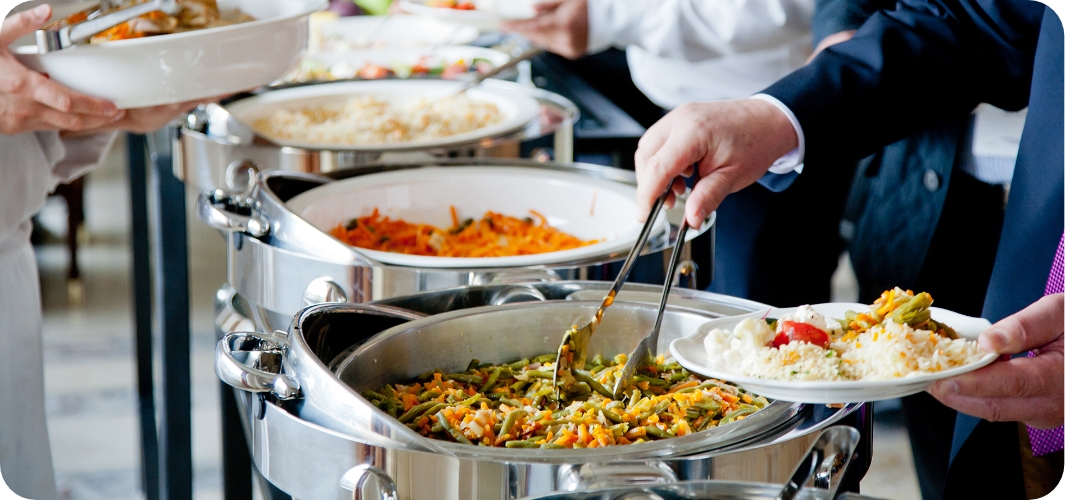
Buffet Service: While a buffet reduces the number of server hands needed, it requires excellent layout planning to prevent long, slow-moving lines that disrupt the event timeline.
-
Family-Style Service: Large platters passed around the tables create an intimate atmosphere, but require ample table space and enough runners to replenish empty dishes quickly.
Ask your caterer for their proposed staff-to-guest ratio. For a standard sit-down plated dinner, a healthy ratio is approximately one server for every ten to twelve guests. For a buffet, you still need sufficient personnel to maintain cleanliness, replenish dishes, and clear away dirty tableware promptly.
Frequently Asked Questions
What is a normal gratuity and service fee percentage for event catering?
Catering contracts almost always include a service fee, which generally ranges between 18% and 22% of the food and beverage total. It is important to know that this service fee covers administrative overhead, coordination labor, and equipment transport costs; it is not a direct tip for the service staff. Optional tips for the servers and bartenders are typically handled separately, often ranging from $20 to $50 per staff member for excellent performance.
Can a caterer legally serve alcohol that I purchase myself?
Whether a caterer can serve client-provided alcohol depends entirely on local state liquor laws and the specific licensing held by the catering company and the venue. Some regions allow “dry hire” bartending, where you buy the alcohol and the insured caterer provides the certified bartenders to pour it. Other jurisdictions strictly require all alcohol to be purchased directly through a licensed distributor or vendor. Always check local regulations to prevent costly compliance issues.
How do caterers handle food safety and temperature control for outdoor events?
Professional caterers use specialized, non-electrical insulated holding cabinets, often called Cambros, to keep hot foods safely above 140 degrees Fahrenheit for several hours. Cold items are transported in refrigerated vehicles or heavy-duty commercial coolers packed with ice. On-site, they utilize portable propane burners, chafing dishes with sterno fuel, and ice beds to maintain safe temperatures throughout the duration of the service.
What happens to the leftover food at the end of the catered event?
Liability policies and local public health codes vary significantly among companies. Many licensed caterers do not allow clients to pack up leftover buffet food due to strict food safety laws regarding items left out at room temperature for hours. However, some companies will pack up unserved, properly refrigerated kitchen reserves if you provide food-safe storage containers and sign a liability waiver releasing them from responsibility.
What is a corkage fee or cake cutting fee?
A corkage fee is a per-bottle charge applied by a caterer or venue if you choose to bring your own wine rather than purchasing from their inventory. Similarly, a cake cutting fee is a per-guest charge levied to cover the labor, plates, and cleanup required for staff to slice and serve a cake sourced from an outside bakery. These fees compensate the team for the lost revenue and the service labor involved.
How far in advance should I book a catering service for a major event?
For popular event seasons, such as late spring and early autumn, it is wise to secure your catering service six to twelve months in advance. High-end, boutique caterers often book out a year or more ahead for Saturdays during wedding season. Booking early ensures you secure your preferred date and gives you ample time to refine your menu concepts, attend tastings, and manage logistical site visits.
