
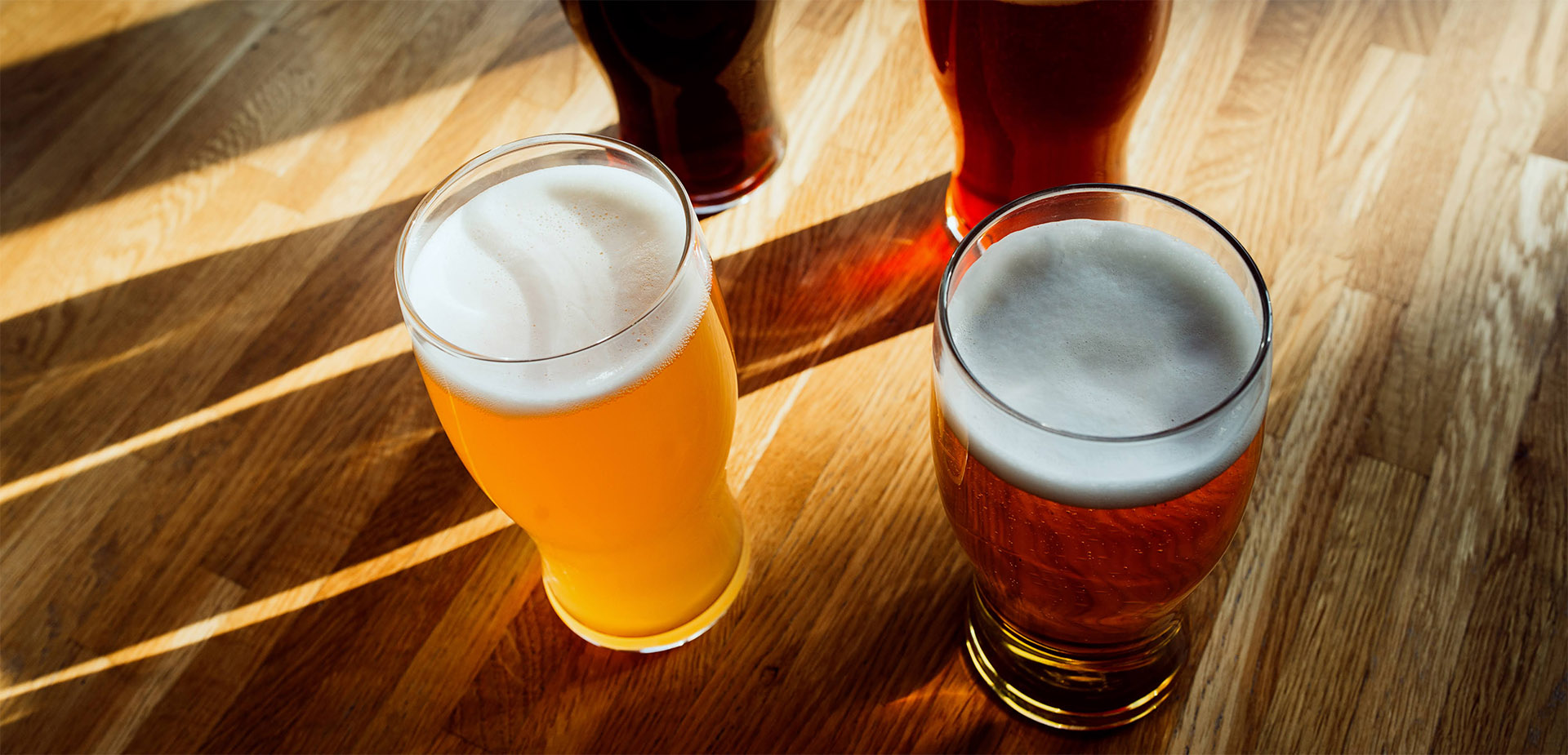
Opening a bar or upgrading an existing beverage program requires balancing customer expectations with behind-the-scenes logistics. One of the most critical decisions you will make is determining the balance between craft beer and commercial beer on your draft list. While both products contain alcohol, water, hops, and grain, their physical demands on your dispensing equipment, storage space, and staff labor are vastly different.
A high-volume sports bar relying on domestic light lagers needs a radically different infrastructure than a neighborhood taproom serving high-gravity double IPAs and barrel-aged stouts. Understanding the engineering, chemical, and operational differences between these two product categories ensures your inventory pours perfectly, your waste stays low, and your profits remain high.
Understanding the Fundamental Differences
To build the right bar infrastructure, you must first understand why craft and commercial beers behave differently under pressure and temperature. Commercial beers are produced by massive macro-breweries. These products are highly filtered, pasteurized, and strictly standardized. They possess low to moderate protein counts and highly predictable carbonation levels, usually ranging between 2.5 and 2.7 volumes of carbon dioxide. Because they are pasteurized, they are resilient against minor temperature fluctuations and have a remarkably long shelf life.
Craft beer is unpasteurized, frequently unfiltered, and chemically dynamic. Craft brewers often experiment with high grain bills, heavy dry-hopping, and adjunct ingredients like fruit purees, spices, or lactose sugars. This results in a living product with active yeast particles, volatile hop oils, and high protein densities. Craft beers also span a massive spectrum of carbonation styles, from low-carbonation nitro stouts to highly effervescent Belgian ales that demand completely customized pouring pressures.
Draft Line Metallurgy and Material Composition
The choice of metal in your draft system is where many bar owners make their first expensive mistake. Commercial beers are highly predictable and less acidic, allowing them to pass through standard chrome-plated brass components without immediately degrading the metal.
Craft beers, especially sour ales, wild fermentations, and heavily hopped IPAs, possess a much lower pH level. The high acidity and active chemical compounds in craft beer will quickly corrode chrome-plated brass. Over time, the acidic liquid eats away at the chrome plating, exposing the raw brass underneath. This reaction introduces a metallic off-flavor into your beer and ruins your expensive draft towers, faucets, and couplers.
For any bar pouring craft options, 304-grade stainless steel is mandatory. Stainless steel is completely inert, meaning it will not react with acidic beverages, no matter how long the liquid sits in the line. Your faucets, shanks, couplers, and draft towers must be solid stainless steel. While the upfront investment is higher than chrome-plated brass, stainless steel components last indefinitely and protect the sensory profile of high-end kegs.
Gas Blending and Pressure Management
A standard commercial beer setup often relies on a single air compressor or a straight carbon dioxide tank to push beer from the walk-in cooler to the faucet. This works for mass-market lagers over short distances, but it fails completely in a dedicated craft beer environment.
Craft beers require precise gas blending to prevent two major draft system failures: over-carbonation and under-carbonation. If you use pure carbon dioxide at high pressure to push a beer over a long distance, the beer inside the keg will slowly absorb that extra gas. By the end of the week, the beer will pour as pure foam. Conversely, if your pressure is too low, the gas dissolved in the beer will break out inside the lines, creating pockets of air that cause pockets of foam followed by flat beer.
To solve this, your bar setup needs a gas blender. A gas blender mixes pure carbon dioxide with pure nitrogen.
-
For standard ales and lagers: A blend of 60 percent carbon dioxide and 40 percent nitrogen allows you to apply enough pressure to push the beer through long lines without over-carbonating the product.
-
For nitrogenated beers: A blend of 25 percent carbon dioxide and 75 percent nitrogen is paired with a specialized stout faucet containing a restrictor plate to create a dense, creamy head.
Every draft line should ideally have its own secondary regulator. This allows your bartender or cellar manager to adjust the exact pounds per square inch of pressure for individual lines based on the specific style of beer being served.
Glycol Chilling and Temperature Control
Temperature is the single most important factor in keeping beer stable. Commercial lagers are designed to be served ice-cold, usually between 34 and 38 degrees Fahrenheit. At this temperature, carbon dioxide stays tightly dissolved in the liquid, creating a crisp, refreshing bite.
Craft beer requires a nuanced approach. While light craft lagers and blonde ales thrive at 38 degrees, complex IPAs, pale ales, and sour beers open up flavor-wise when served between 42 and 45 degrees. Heavy stouts, barleywines, and Belgian quadrupels show their full aromatic potential closer to 50 degrees Fahrenheit.
If your bar uses a long-draw system where beer travels from a remote cooler to a central island bar, a trunkline cooled by a dedicated glycol chiller is essential. The glycol machine pumps food-grade antifreeze alongside your product lines, keeping the beer at a constant temperature from the keg to the glass. If your setup features a mix of commercial and craft choices, consider splitting your walk-in cooler into two temperature zones or utilizing secondary cooling loops to ensure each style hits the glass at its appropriate temperature.
Glassware and Washing Infrastructure
Serving a commercial light lager is straightforward. It goes into a standard mixing glass or a thick mug that can be washed in a standard commercial dishwasher using heavy detergents. Craft beer requires a specialized glassware inventory and a strict cleaning protocol known in the industry as beer-clean glass.
Residual oils, dishwashing detergents, and lint from towels destroy the foam head of a craft beer. This foam is vital because it traps the volatile hop aromas that craft drinkers expect. To achieve a beer-clean standard, your bar kitchen or under-bar setup must feature:
-
A three-compartment sink system: Dedicated solely to glassware, utilizing specialized, non-petroleum-based sanitizers and low-suds detergents.
-
An under-counter glass rinser: Installed directly into the drip tray of your draft tower. This device uses pressurized cold water to rinse out any remaining sanitizer residue, cools the glass to prevent thermal shock, and lubricates the inside of the glass so the beer slides down smoothly, creating a perfect two-finger head.
Maintenance and Line Cleaning Schedules
Because commercial beer is pasteurized and filtered, it leaves behind very little organic debris in your draft tubing. Craft beer, with its live yeast and heavy particulate matter, builds up yeast biopolymeric films, beer stone, and bacteria at an accelerated rate.
If your lines are not cleaned regularly, your craft beers will begin to taste sour, buttery, or like wet cardboard. A professional craft bar setup must budget for a rigorous two-week cleaning cycle. Every fourteen days, a caustic solution must be pumped through the lines to break down organic proteins and yeast build-up. Every quarter, an acid clean must be performed to strip away mineral deposits like beer stone. Your lines must also be completely replaced every year or two to prevent flavor staining, especially on lines dedicated to pungent fruit beers or dark stouts.
Frequently Asked Questions
Can I use the exact same keg coupler for both craft and commercial beer kegs?
Most domestic commercial beers and North American craft beers use the standard Sankey D-System coupler. However, many European commercial imports and specialized craft imports require different styles, such as the S-System, A-System, or U-System couplers. If your bar plans to rotate through global styles or rare imports, your setup needs a collection of interchangeable couplers that can be quickly swapped onto your existing beer lines.
How does the physical footprint of craft kegs differ from commercial kegs in a walk-in cooler?
Commercial breweries almost exclusively ship their product in half-barrel kegs, which hold 15.5 gallons and take up a wide, uniform floor space. Craft breweries frequently package their low-volume or high-potency releases in sixth-barrel kegs, often called sixtels, which hold just 5.16 gallons. Sixtels are tall and narrow, allowing you to fit three different craft styles in the same physical footprint as one commercial half-barrel. Your cooler layout should incorporate sturdy keg shelving to maximize vertical storage space for these smaller craft kegs.
Why does craft beer generate more product waste during line cleaning than commercial beer?
Craft beer lines generally require larger diameter tubing, such as three-eighths inch lines, to minimize resistance when pouring complex, dense liquids over long distances. These wider lines hold more physical liquid per foot than narrow lines. When you flush your system for bi-weekly cleaning, all the beer sitting inside those lines must be pushed out and discarded. Because craft beer costs significantly more per gallon than commercial macro-beer, this scheduled volumetric waste represents a higher monetary cost that must be factored into your beverage margins.
Do craft beers require a different style of tap handle display compared to commercial brands?
Commercial brands supply their own standardized, highly recognizable tap handles designed to fit standard draft faucets. Craft breweries also provide custom handles, but these are often oversized, heavy, or uniquely shaped artistic pieces. If you align multiple oversized craft handles side by side on a standard draft tower, they will often bump into one another, preventing the faucets from opening or closing fully. A craft setup requires greater spacing between faucet shanks on the tower header to accommodate these varied shapes.
Can I run a craft beer program out of a direct-draw kegerator setup instead of a walk-in cooler?
Yes, direct-draw setups, where the keg sits directly beneath the tap faucet inside a self-contained refrigeration unit, are highly efficient for craft beer. Because the line distance is minimal, usually under two feet, you do not need complex glycol cooling systems or heavy blended gases. Pure carbon dioxide at a low pressure works perfectly. The primary limitation is volume and inventory variety, as standard kegerators can only hold a small number of kegs at one single temperature setting.
What is the impact of dry-hopped craft beers on standard vinyl draft tubing?
Heavily dry-hopped craft beers contain high concentrations of essential hop oils like myrcene and humulene. These volatile organic compounds can easily penetrate standard, low-cost vinyl draft tubing over time. This leads to flavor scalping, where the tubing permanently absorbs the flavor and aroma profile of the hops. If you rotate a delicate blonde ale or a light commercial lager onto that same draft line later, it will taste distinctly like old hops. A dedicated craft bar setup should use barrier tubing lined with an inner polymer layer that blocks oil absorption.
